Buttermilk dip
The cooling one. A buttermilk-based dip resets your palate between bites so the next piece still tastes like the first. Taught with a short rest so it coats the tongue rather than sliding off.
Job: reset the palate
1204 4th Ave S, Nashville, TN 37210
Monday to Friday, 9:00 AM – 6:00 PM
Wings Snob · Nashville Hot Chicken Course
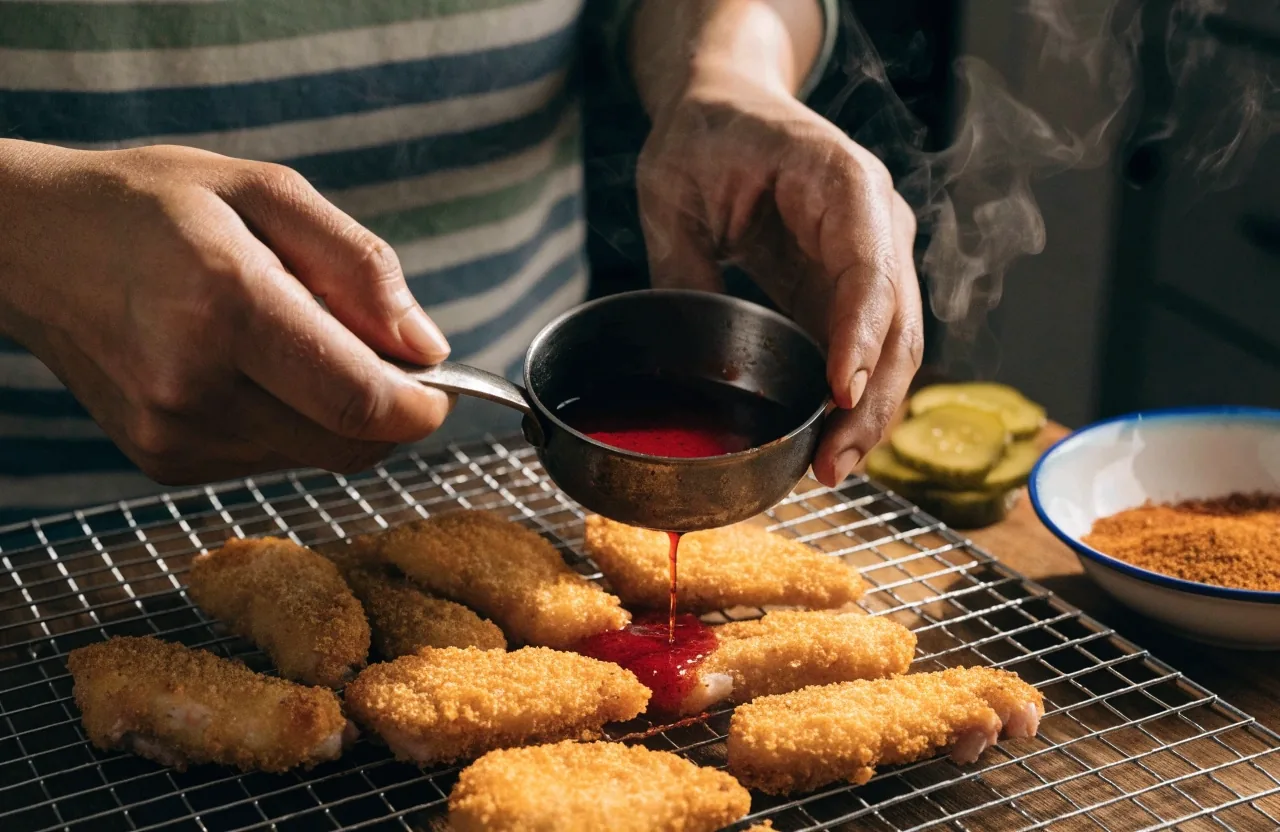
The sauce is where Nashville hot chicken lives or dies. This page covers the builds the course teaches, from the classic cayenne oil to the dipping sauces that go alongside.
Five sauce builds sit at the center of the course: the cayenne oil that goes on the chicken, two dipping sauces that sit beside it, a honey variation, and the base ratios you use to push any of them up or down the heat ladder. Each format below, tenders, sliders, and wings, changes how the sauce behaves on the plate.
Cayenne, brown sugar, smoked paprika, and garlic heated until the spices bloom. The narrow window between bloomed and burnt is the first thing the lessons drill.
A buttermilk-based dip resets your palate. A vinegar-forward sauce sharpens the crust. Both are taught as companions to the oil, never as replacements for it.
Sliders, tenders, and wings each get their own lesson because sauce order, dip depth, and coating method change with the shape of the piece.
The course hands over base ratios and the reasoning behind each element, so you calibrate your own oil instead of copying a recipe once.
Heat levels run from mild to Reaper across the course. The same oil build carries all five; what changes is how far you push the cayenne and how much sugar you use to round the finish.
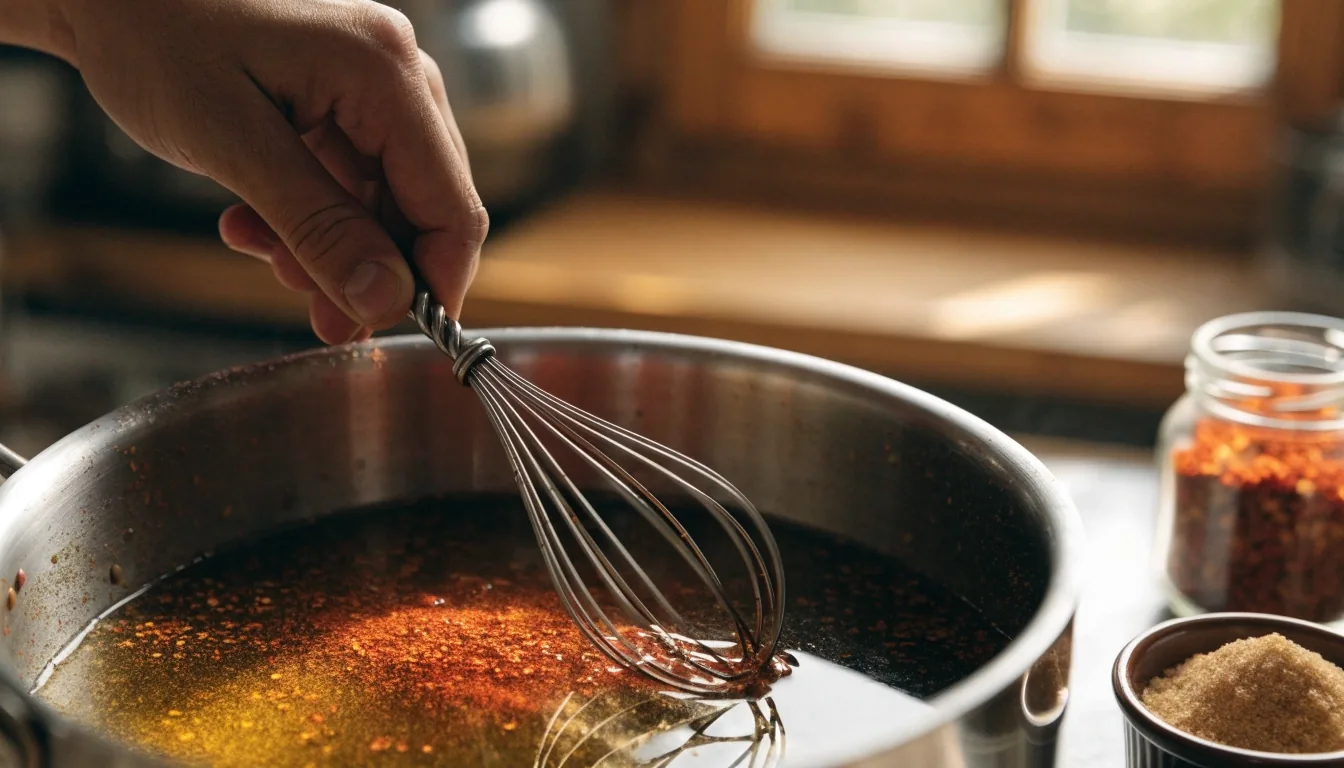
Cayenne oil is not a sauce you pour. It is a fa base heated with cayenne, brown sugar, smoked paprika, and garlic until the spices bloom. The window between bloomed and burnt is narrow, and the course shows you the color and smell that mark it.
Get it right and the oil carries heat without tasting raw. Get it wrong and no amount of chicken saves the plate. This is the first lesson for a reason: everything else on the plate is built on top of a fa base that either works or does not.
The lesson walks through the order you add each element, why the garlic goes in when it does, and how the oil should look when it is ready to spoon over a fresh fried piece. You taste it on its own first, before it ever touches chicken.
Cayenne on its own is one-dimensional. Smoked paprika adds a depth that reads as savory rather than just hot, and brown sugar rounds the edges so the finish does not turn bitter. The two are doing separate jobs, and the course treats them that way.
Chester's Chicken used exactly that combination, smoked paprika, cayenne, brown sugar, and garlic, in its 2026 Nashville Hot limited-time menu. It is a commercial example of a ratio home cooks can build themselves, which is why the course uses it as a reference point rather than a secret.
What the course adds is adjustment. Each element is taught with a direction: more paprika for a smokier finish, less sugar when the crust is softening under the sauce, more garlic when the oil tastes flat. You learn the base first, then the moves.
The cayenne oil goes on the chicken. Dipping sauces go beside it, and they do a different job: cooling, cutting, or adding acid. None of them replace the oil. They support it.
The cooling one. A buttermilk-based dip resets your palate between bites so the next piece still tastes like the first. Taught with a short rest so it coats the tongue rather than sliding off.
Job: reset the palate
The cutting one. A vinegar-forward sauce sharpens the crust and pulls the richness back down. It is the dip that makes a heavy fried piece feel lighter halfway through the plate.
Job: cut the richness
The sweet one. A honey build for people who want sweetness against the heat. The lesson warns about quantity, because too much and the crust you fried softens before the plate reaches the table.
Job: sweetness against heat
All three dips are built to sit at the edge of the plate, not to be poured over the chicken. The course covers both the oil and the dips in the same lesson block so you can taste how each one changes the same piece of fried chicken.
On a slider, the order you build in decides whether the bun survives. Sauce goes on the bottom bun, then pickles, then chicken, and nothing wet touches the top bun until the last second. Get it wrong and you are eating a soggy sandwich by the second bite.
The course films a build in real time so you can see where the moisture goes. It is a small thing that separates a good Nashville hot chicken slider from a mess.
A thin layer of cayenne oil, not a soak. The bottom half takes the fa because the top half has to stay dry until the end.
They sit on the sauce, not under it, so their acid stays in the bite instead of bleeding into the bread.
The fried piece goes on while it is still hot, and the top bun goes on seconds before serving. Any longer and the steam does the damage.
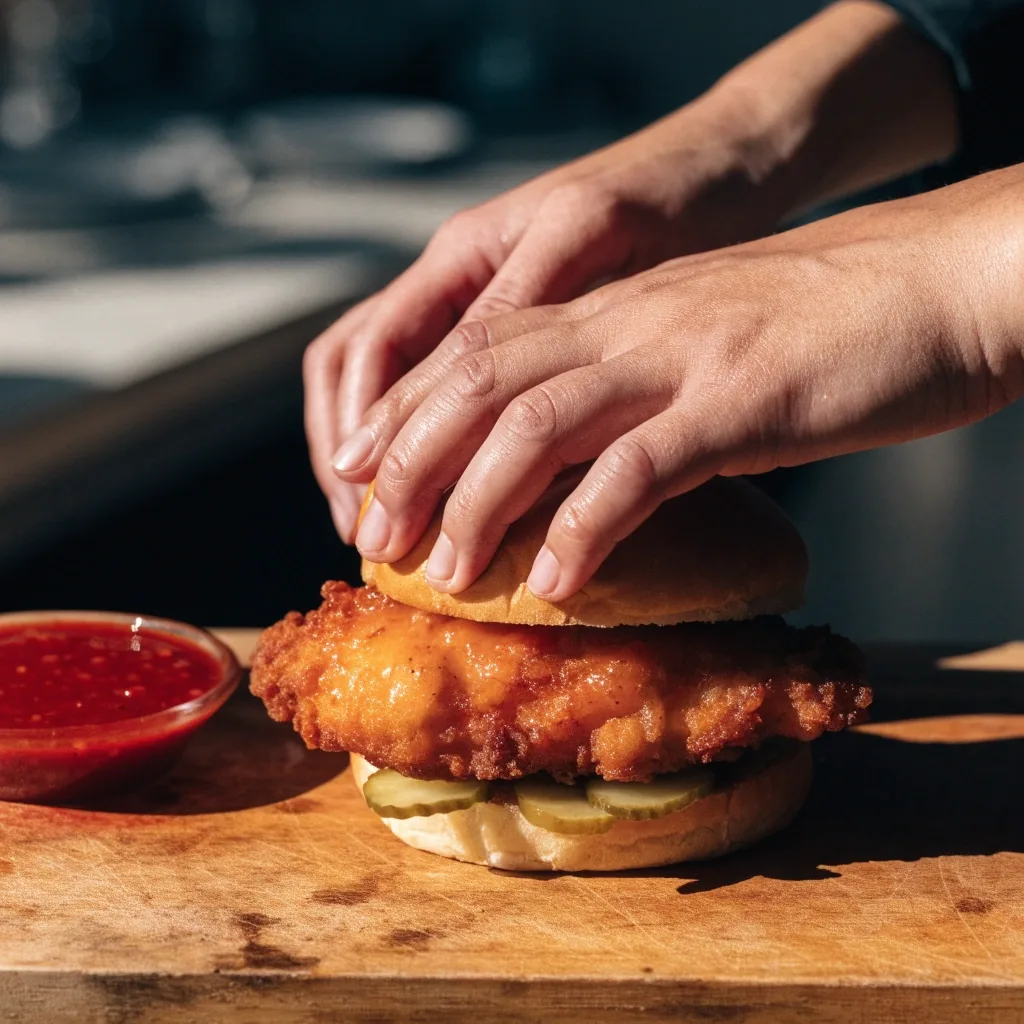
The filmed build runs unedited from first sauce to closed bun, so you can watch how long the top half stays off and where the moisture starts to show.
Tenders are the format where sauce becomes personal. You fry the batch, then dip each piece to the heat level you want, which means one pan can serve mild and extra hot at the same table.
The course teaches a shallow dip rather than a soak. A soak softens the crunchy crust you just worked for, and once the crust goes soft there is no fixing it. Keep the oil warm and the dip quick, and each tender keeps its edge.
Half the piece goes in, then out. You get a heat line across the tender and a dry end you can hold, which is useful when the table has mixed tolerance.
The oil should be warm when the tenders go in, not hot. Warm oil clings in a thin coat; cold oil sits on the surface and slides off with the first bite.
Because dipping is per piece, a single fried batch can serve mild at one end of the table and Reaper at the other without frying twice.
Tenders rest on a rack for a moment after dipping. Standing them on paper towels traps steam underneath and undoes the crust from below.
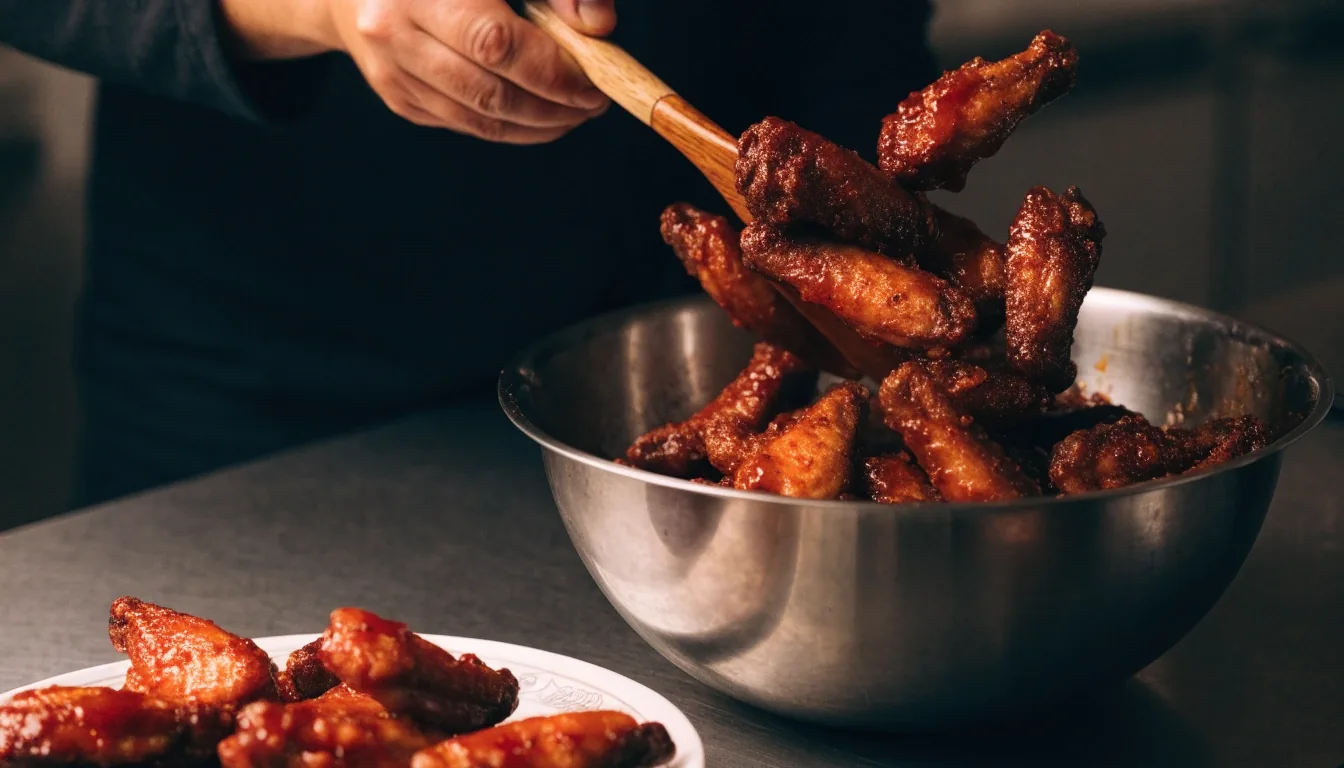
Wings are the hardest format for sauce, because the skin is slick and the oil wants to slide off. The lesson covers scoring the skin, drying it before the fry, and tossing in a bowl rather than drizzling. Tossed wings coat evenly; drizzled wings have bare spots.
It sounds minor until you have eaten a wing where half the bite has no heat. Scoring gives the oil somewhere to sit, drying removes the surface moisture that would otherwise steam off the coating, and the bowl does the rest.
Once you have made the five heat levels, you can adjust them. Want more smoke and less burn? Push the paprika. Want the finish sweeter? Add sugar, but not so much that the crust softens. The course gives you the base ratios and the logic behind each one, so you are calibrating instead of copying. That is the difference between following a recipe and owning one.
More smoke, less burn
Raise the smoked paprika and hold the cayenne where it is. You keep the depth of a Nashville hot sauce without pushing the plate past what your table can eat. Taste the oil before it goes on anything, and stop when the smoke reads as flavor rather than as dust.
A sweeter finish
Add brown sugar in small amounts and taste between each addition. The ceiling is the point where the crust starts to soften under the sauce. Past that, you have made a glaze, and the crunch you fried for is gone.
Sharper heat, same oil
Climbing toward Reaper is mostly a cayenne move, not a rebuild. You keep the same fa base and the same paprika and sugar balance, then let the cayenne carry the level. This is how one oil build serves the whole heat ladder.
Dips stay separate
The dipping sauces keep their own ratios. A buttermilk dip that is too thin will not cling; a vinegar sauce that is too sharp flattens the chicken. The course keeps the two systems apart on purpose, because they are solving different problems on the plate.
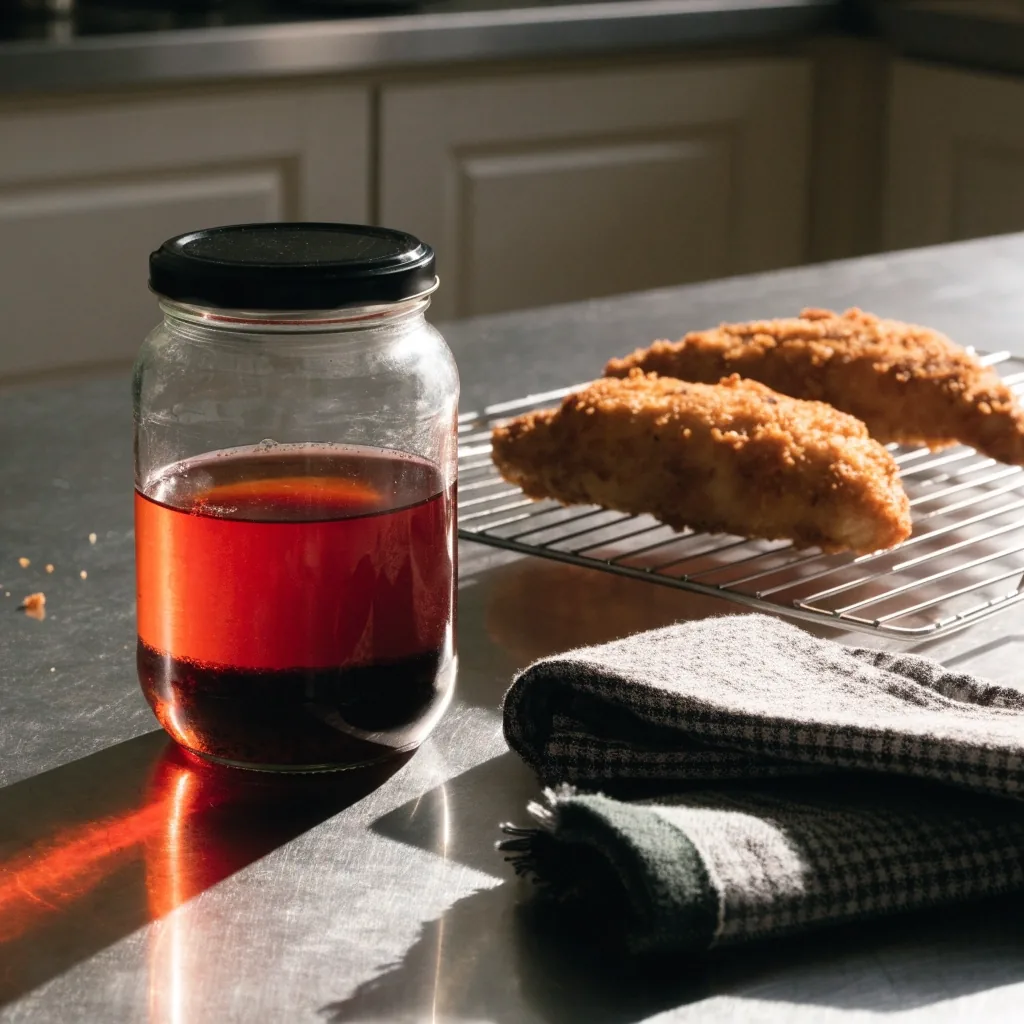
Cayenne oil keeps in the fridge for a couple of weeks in a sealed jar, and it separates, which is normal. Warm it gently before use, and stir rather than shake so the spices redistribute without whipping air into the fa.
Fried chicken reheats best in an oven on a rack, not a microwave, because steam is the enemy of the crust you built. A rack lets the heat move under the piece instead of trapping moisture against the bottom. The course includes a short note on both, since leftovers are inevitable when you are frying for a household.
The dips are best fresh. A buttermilk-based sauce loses its body after a day or two in the fridge, so the lessons keep the batch small and make it close to serving time.
The short answers to the three things people ask most about the sauces. Longer explanations sit inside the lessons themselves.
No. The oil goes on the chicken, dips go beside it. They do different jobs. The oil carries the heat into the crust; a dip cools, cuts, or adds acid at the bite. Mixing them up is the fastest way to lose the crust you fried for.
Cayenne oil keeps in the fridge for a couple of weeks. Dips are best fresh. If you are cooking for a group, build the oil first, then make the dips while the chicken fries.
No. A Dutch oven or cast-iron skillet on a home range is what the lessons use. A thermometer helps you hold the oil temperature, and a rack beside the stove gives the finished pieces somewhere to drain.
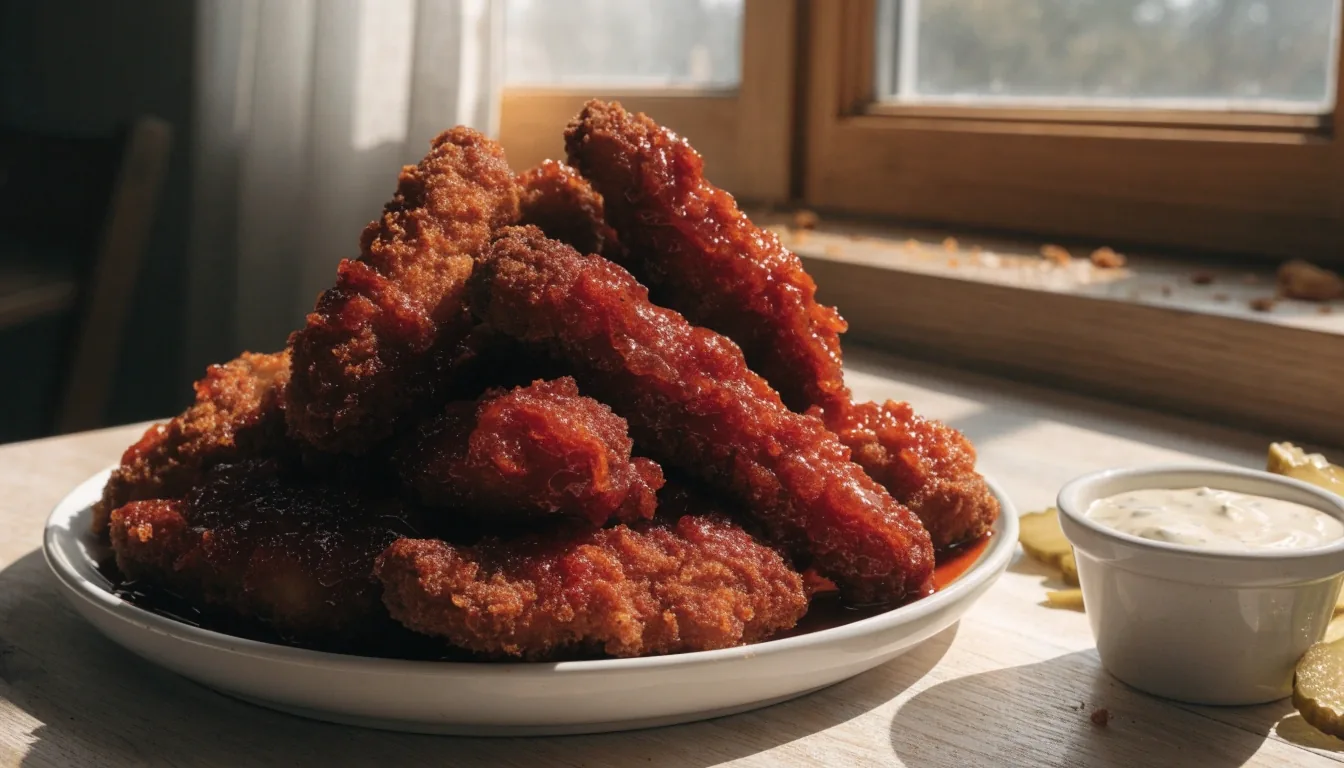
The course starts with the cayenne oil, moves through the dipping sauces, then works format by format across tenders, sliders, and wings, all the way up the heat levels from mild to Reaper. If you want to see the recipes in motion before enrolling, start with the free lesson.
Wings Snob · 1204 4th Ave S, Nashville, TN 37210 · Monday to Friday, 9:00 AM to 6:00 PM · Contact