
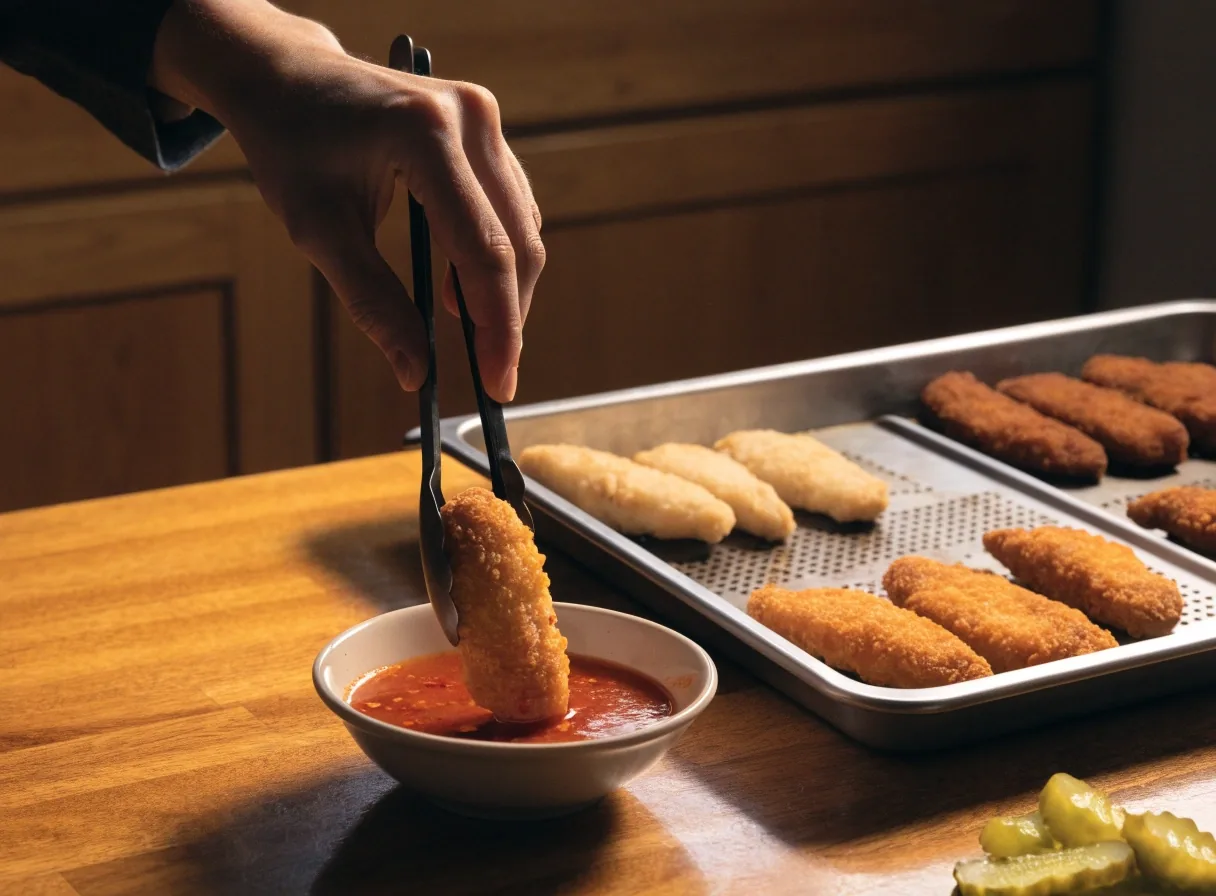
Tenders
Tenders get their own lesson because dipping per piece is how you serve a mixed table. You will work through a tray at two heat levels so one plate can carry both.
1204 4th Ave S, Nashville, TN 37210
Monday to Friday, 9:00 AM – 6:00 PM
Nashville Hot Chicken Course
This page is the honest version of what you get: the modules, the order they run in, and the gear sitting on your counter when lesson one starts. No filler, no promises about your life changing. Just the curriculum.
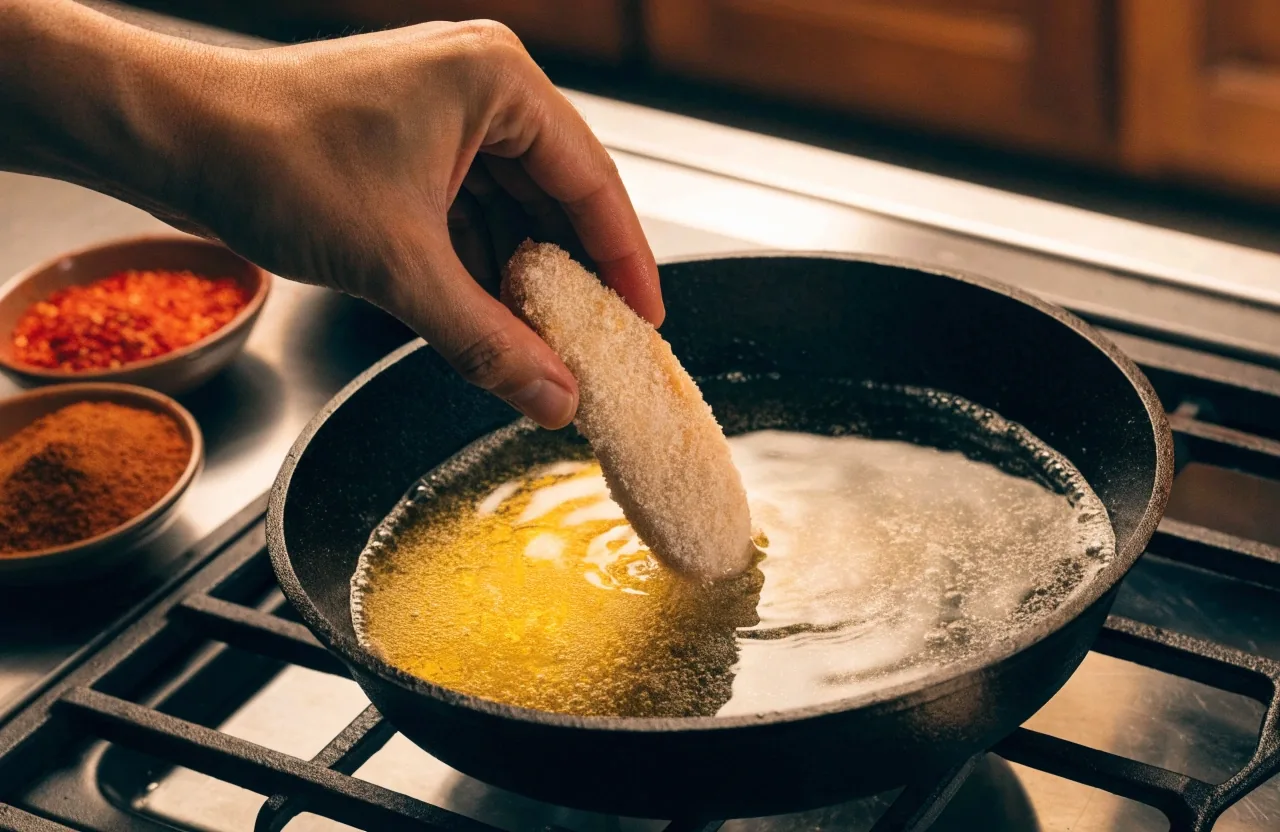
The course opens with the cayenne oil, not the chicken. That surprises people, but the oil is the variable that decides whether the crust survives, and building it first means every later lesson has a stable base.
From there you move to the dry brine, the dredge, the fry, and then the sauce timing. Formats come last, because tenders, sliders, and wings are all variations on the same core technique. You learn the technique once and apply it three ways.
Bloom the spices until the color turns and the smell sharpens, then stop. This is the base every later lesson leans on.
Salt goes on early and stays. The lesson covers how long each cut needs and how the surface should feel before it hits the dredge.
Flour, seasoning, and the shake that decides whether the coating clings or falls off in the oil.
Oil depth, target temperature, and how many pieces your pan can take before the oil drops.
When the cayenne oil meets the finished bird, and why a minute too early costs you the crunch.
Formats come last on purpose. Same dredge, same oil, three different handling routines.
The cayenne oil lesson
The margin is narrow, and the lesson shows you the color and smell that mark the window. You will make two batches in this module, one at medium and one at extra hot, so you feel how the ratio shifts rather than just reading it. Most students say this is the lesson that changes how they cook everything else.
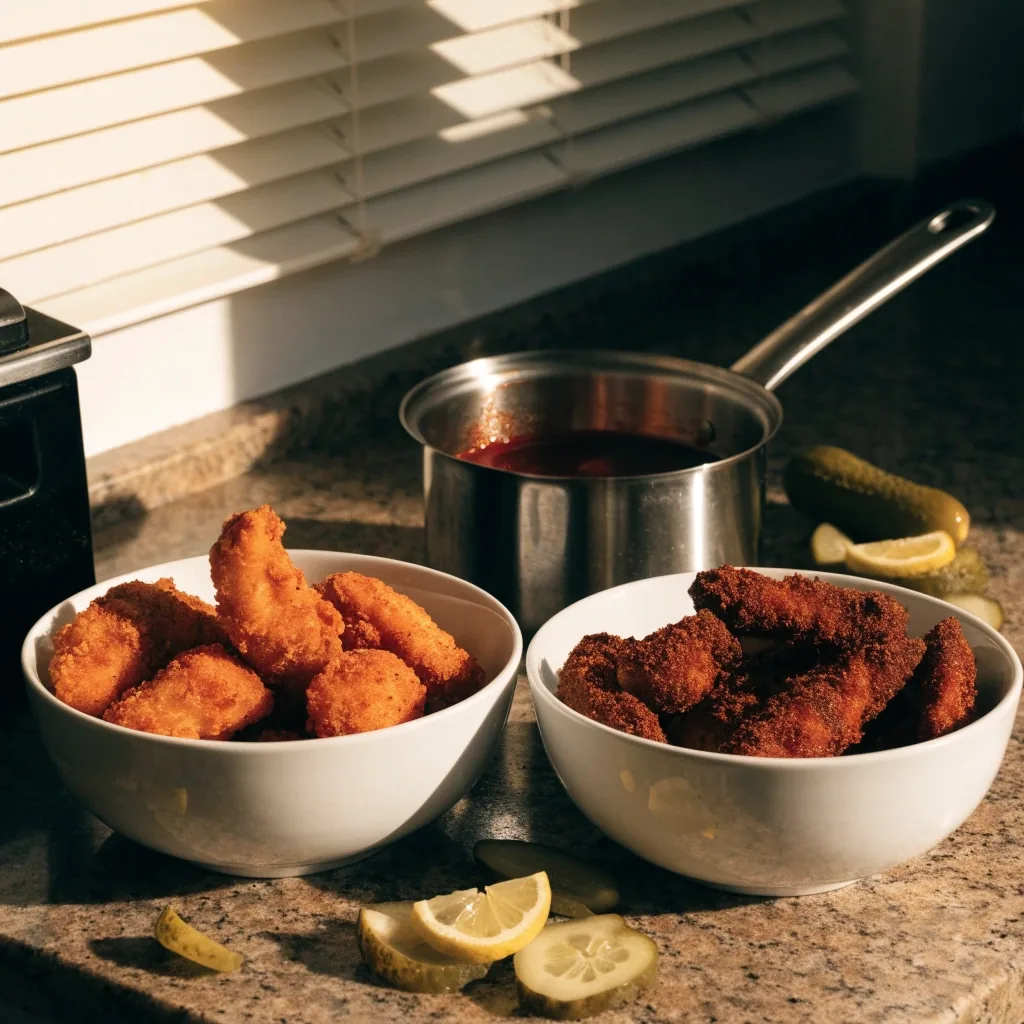
A crunchy crust is a temperature problem before it is a recipe problem. The lesson covers oil depth, target temperature, and how many pieces your pan can take before the oil drops.
You will see a batch go in cold and a batch go in right, side by side. The visual difference is the whole point.
Resting matters too: a few minutes on a wire rack sets the coating so it does not slide when the oil hits.
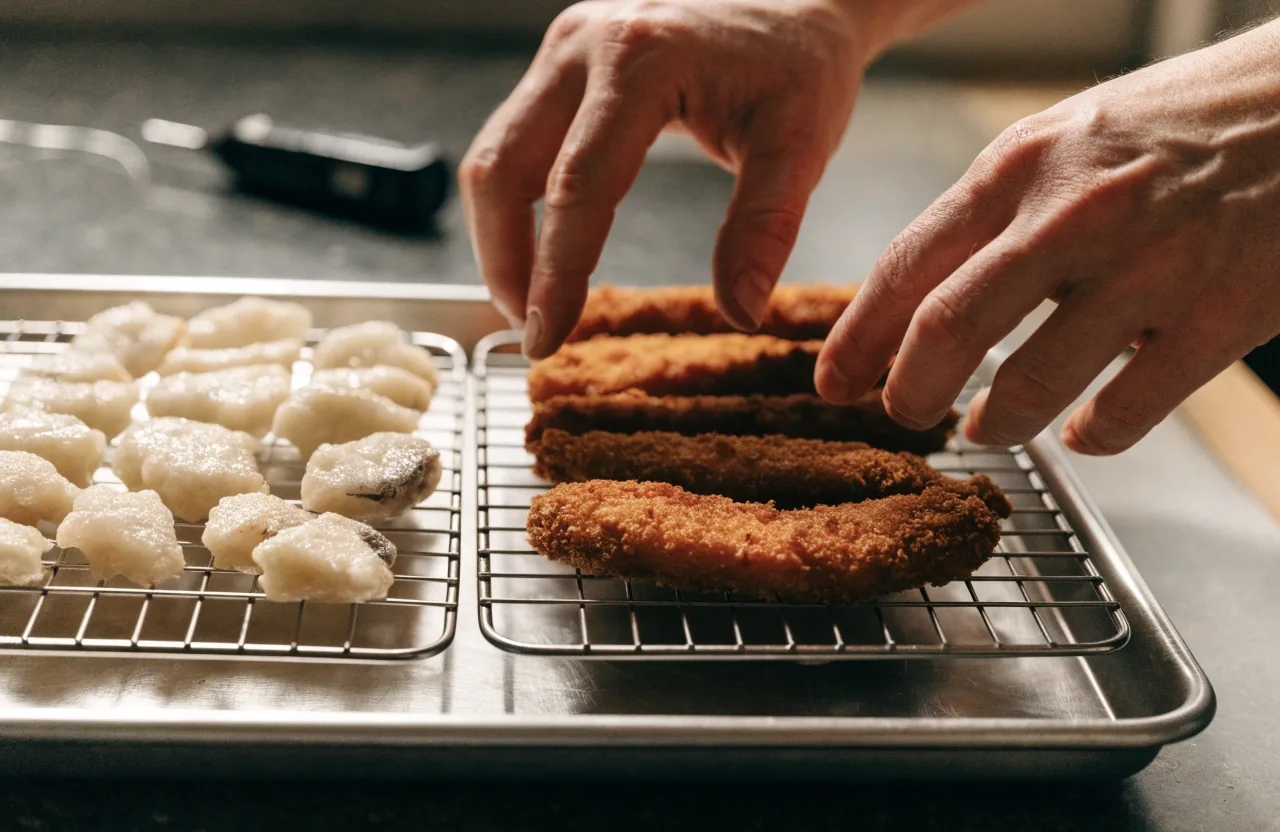
Tenders get their own lesson because dipping per piece is how you serve a mixed table. You will work through a tray at two heat levels so one plate can carry both.
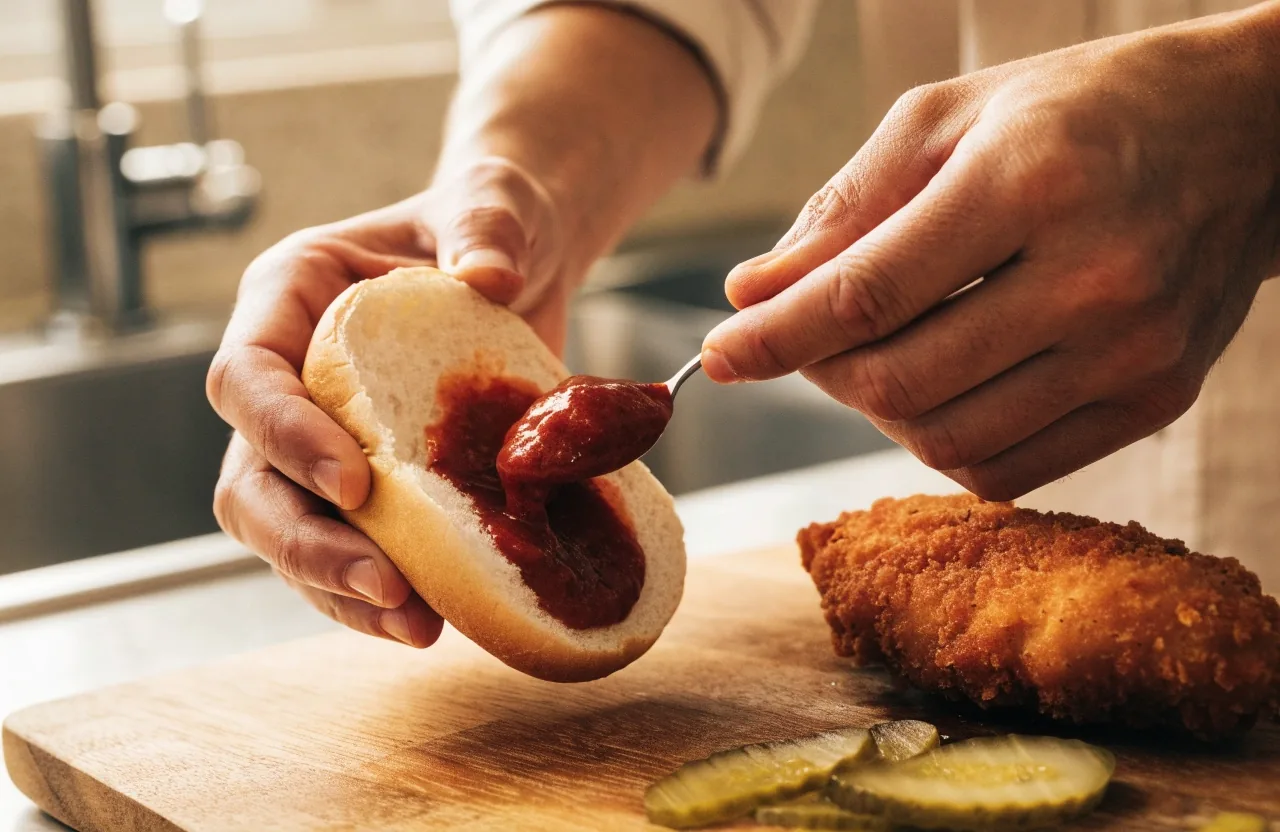
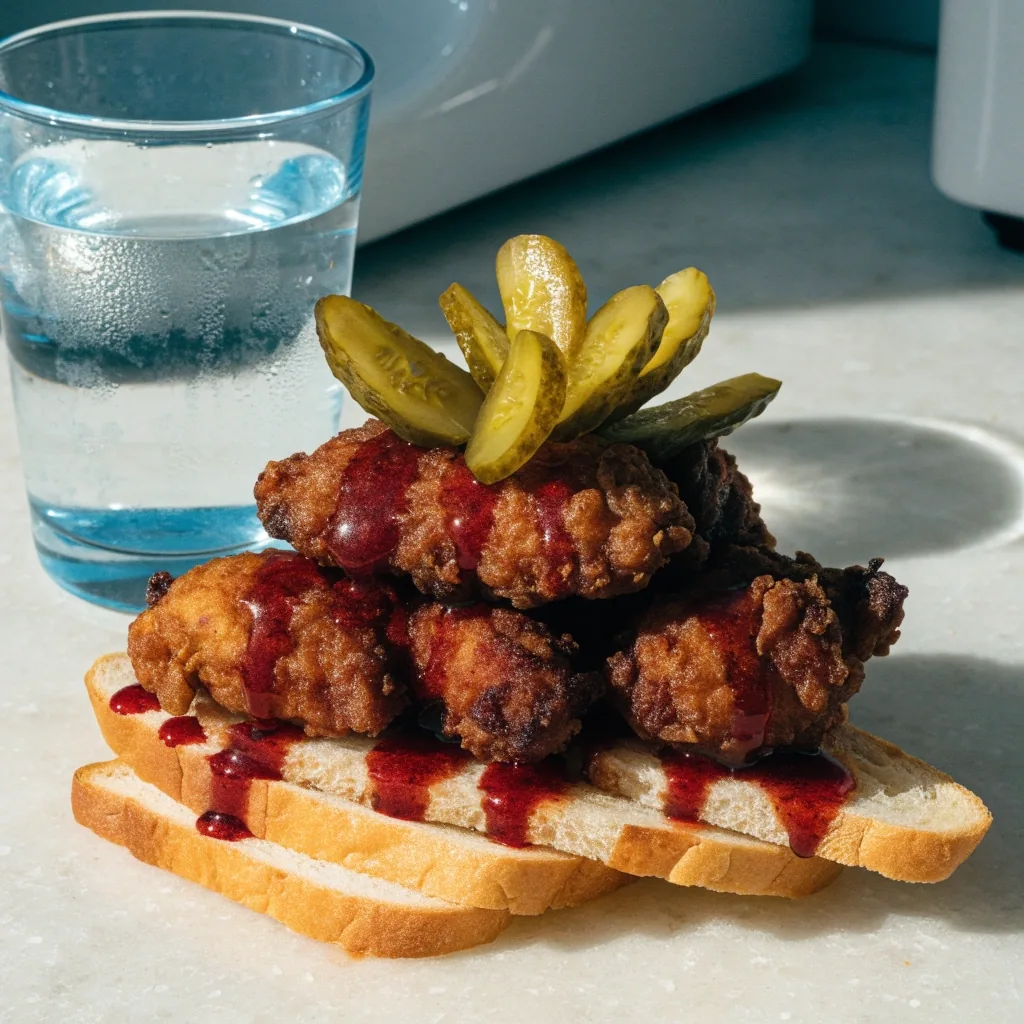
The build order matters: bun, sauce, pickles, chicken, and nothing wet against the bread until the last second. The lesson walks the stack twice, then hands you the tray.
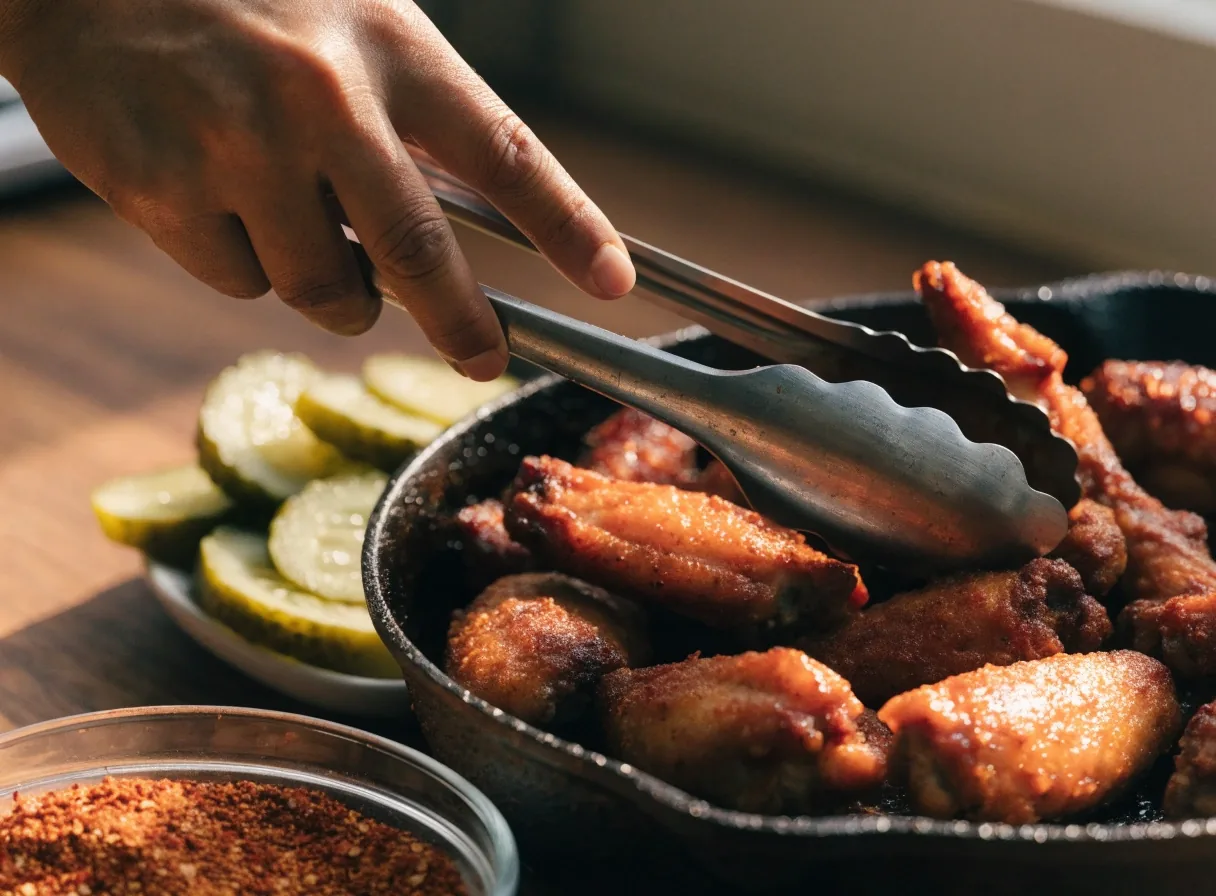
Wings close the format section, and they are the hardest, because the skin wants to fight your oil temperature. Same dredge, same oil, different handling.
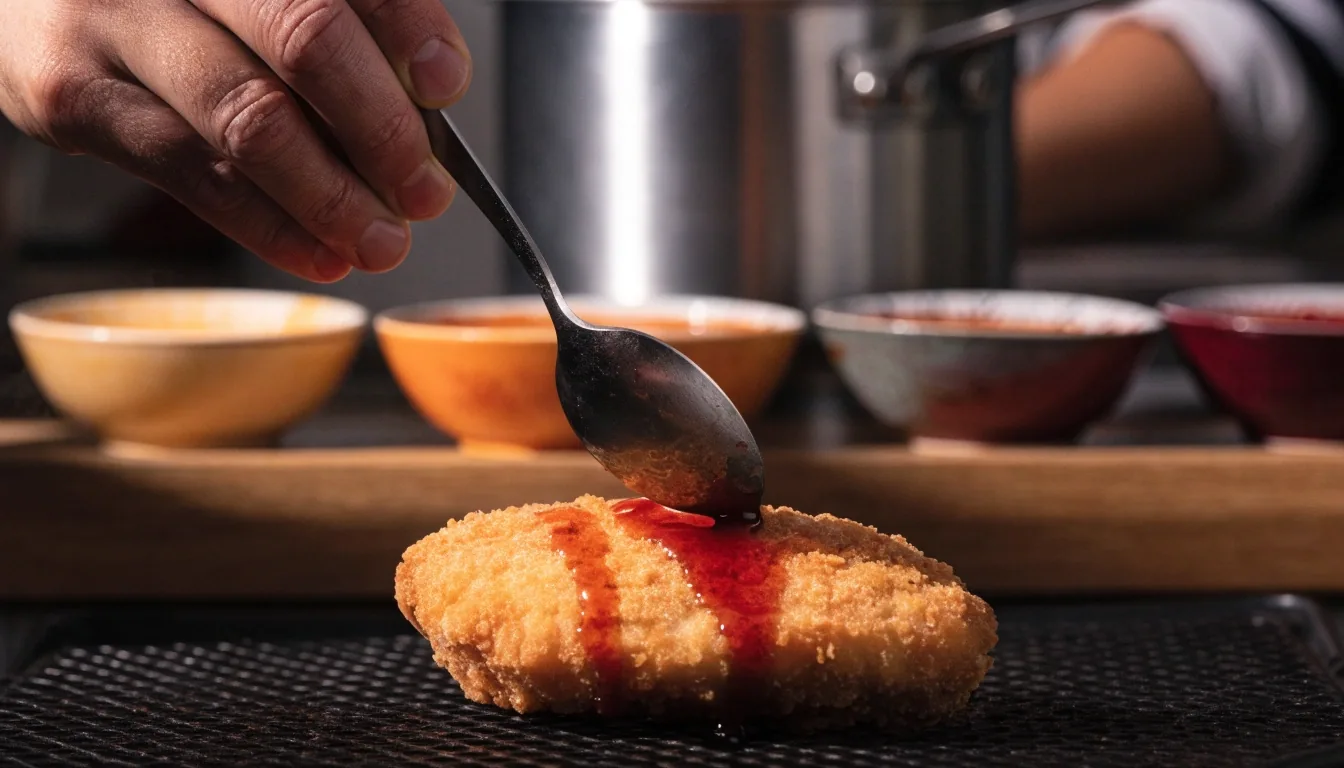
The course teaches five rungs, each with its own cayenne-to-sugar ratio. Mild is genuinely mild, not a token. Reaper is for people who already eat at the top of the scale and want the cayenne-forward character to stay intact under the heat.
You build all five and taste the ladder in order. It is the fastest way to find your real ceiling instead of guessing.
See the heat ladderCast iron or a heavy Dutch oven. A thermometer, and we mean a real one, because timing alone will not get you there. A wire rack and a sheet pan. A pair of tongs you do not mind staining.
That is the equipment list. The pantry list is short too, and everything on it is easy to find at a regular grocery store.
Streaming video with written recipes underneath, so you can cook from the text once you have watched the technique. Each module has a short troubleshooting list for the things that go wrong most. You can pause, rewatch, and cook at your own pace. There is no live schedule to keep up with.
Each technique is filmed on a home range, not in a commercial kitchen, so what you see is the setup you already have.
Once you have watched a module, the text version carries you through the cook without pausing mid-pan.
Oil too hot, dredge too thin, sauce applied too early — each module names the fix instead of leaving you to guess.
Home burners vary more than people expect. The lessons include notes for gas, electric coil, and induction, plus what to change if your pan is thin or your oil volume is low.
If your first batch comes out darker than the video, the troubleshooting section tells you which variable to move. The goal is a repeatable result on your equipment, not ours.
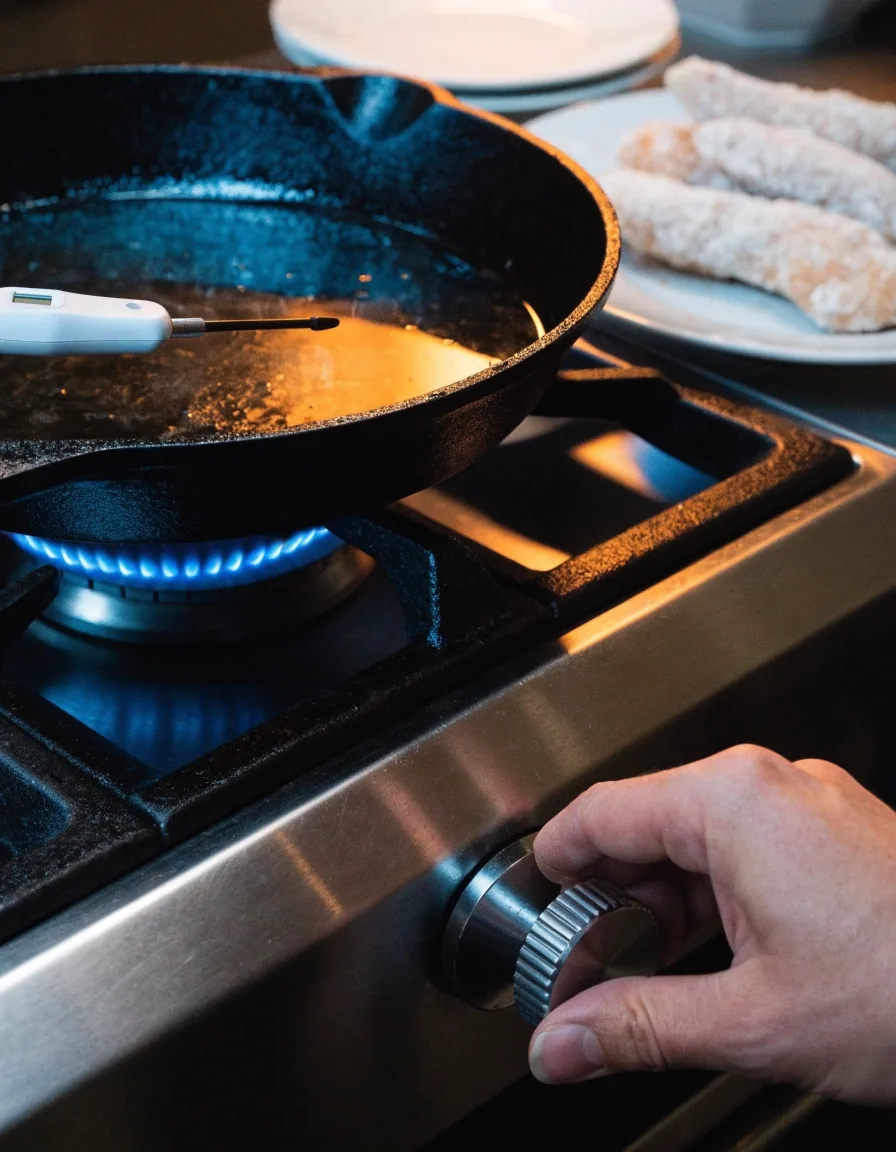
Notes for gas, electric coil, and induction are included in the lesson text.
The traditional plate is chicken over white bread with pickles, and the course keeps that. Slaw and fries are included as quick builds because they are what people actually serve alongside.
The pickle lesson is short but real: acid resets your palate, and that is what makes a hot plate finishable.
If you want the sauce side of the course in more depth, the sauces and recipes page carries the full list of cayenne-forward builds and their ratios.
Explore sauces and recipesEnrollment is a one-time purchase that opens the full module library. Access does not expire on a schedule, so you can return to a lesson months later when you want to rebuild a heat level. Group and gift enrollment are handled by the team directly, and the contact page has the details.
Video lessons are built in short modules you can finish over a few evenings, and you can revisit them whenever you cook.
No. Cast iron or a Dutch oven on a home range is what the lessons are filmed on.
Yes, though most students watch a module once, then cook from the written recipe underneath.
You build all five rungs, and the mild one is a real recipe rather than a watered-down version of the hot one. The lesson walks the ladder in order so you can stop at the level your table actually enjoys.
Enrollment opens the whole library at once, so the cayenne oil lesson is waiting whenever your kitchen is free. If you want to see the technique before you buy, watch the free lesson first.