
Nashville, Tennessee
About Wings Snob
Wings Snob is a Nashville cooking course, run out of a kitchen on 4th Ave S, built around one regional style done properly. Here's who teaches it and how the curriculum came together.
Our kitchen
Where we cook
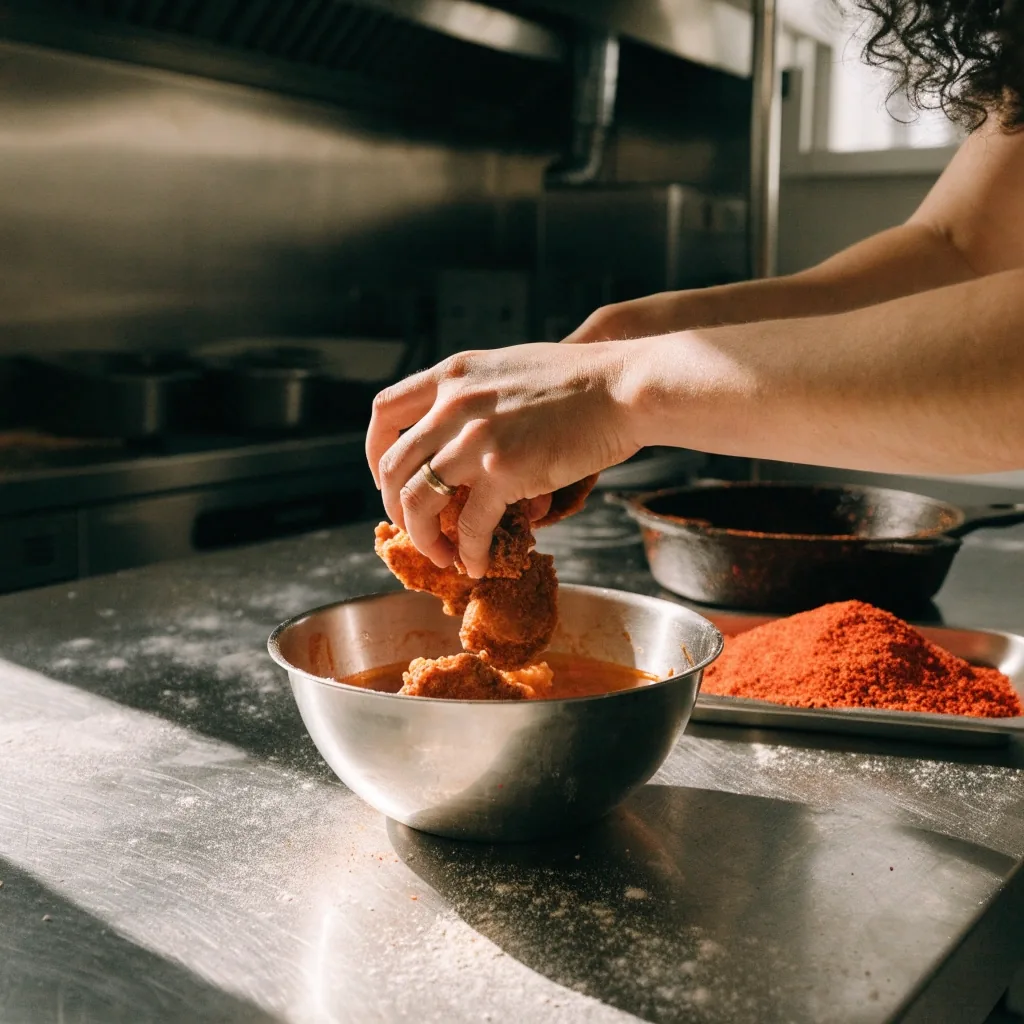
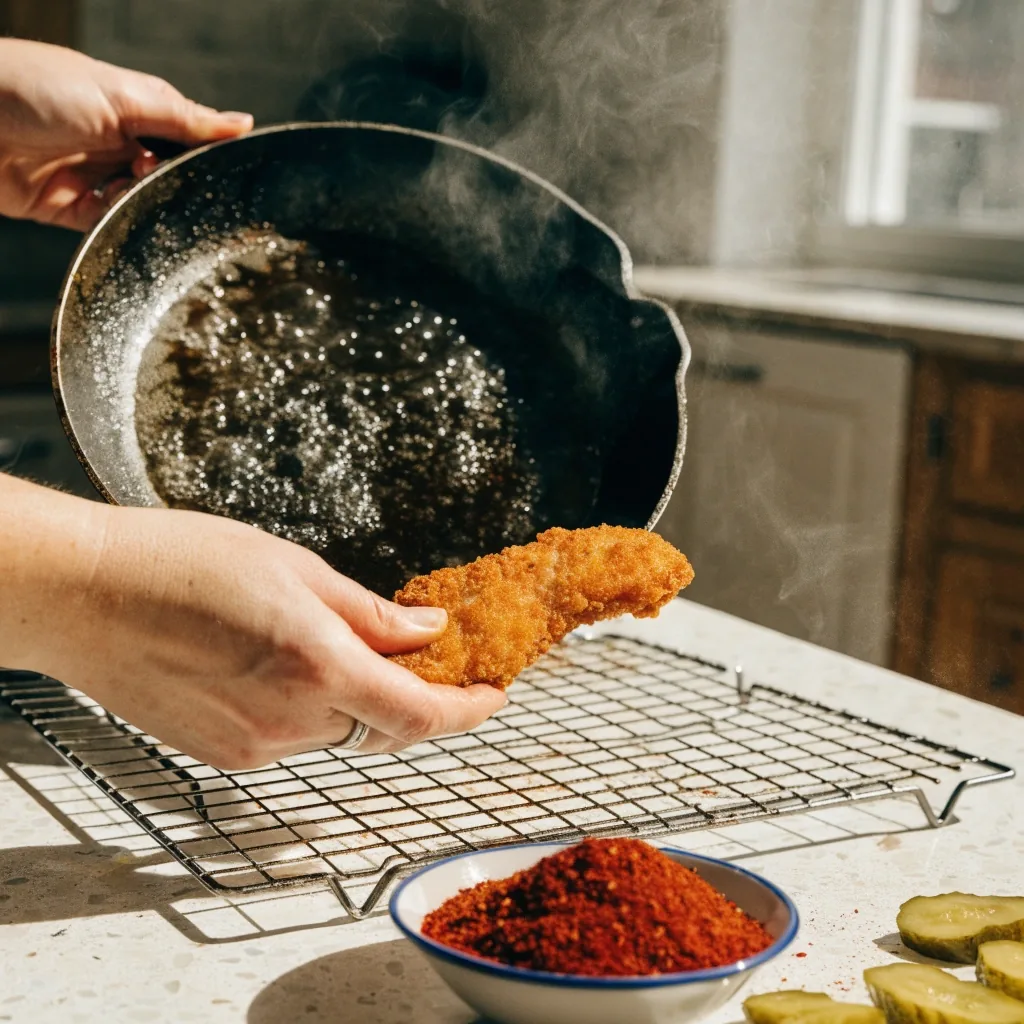
The course is filmed in Nashville, which matters more than it sounds. This is the city where hot chicken is a daily argument, not a trend, and the reference plates are within driving distance. That proximity shaped the curriculum: we test against what's actually served here, not against a generic spicy chicken recipe.
When a lesson says the crust should look a certain way, it's because that's what it looks like on a plate in this city. A crust that holds under sauce, a tender that stays juicy through the fry, a wing that carries heat without going bitter — those are the checks we run before a lesson is filmed.
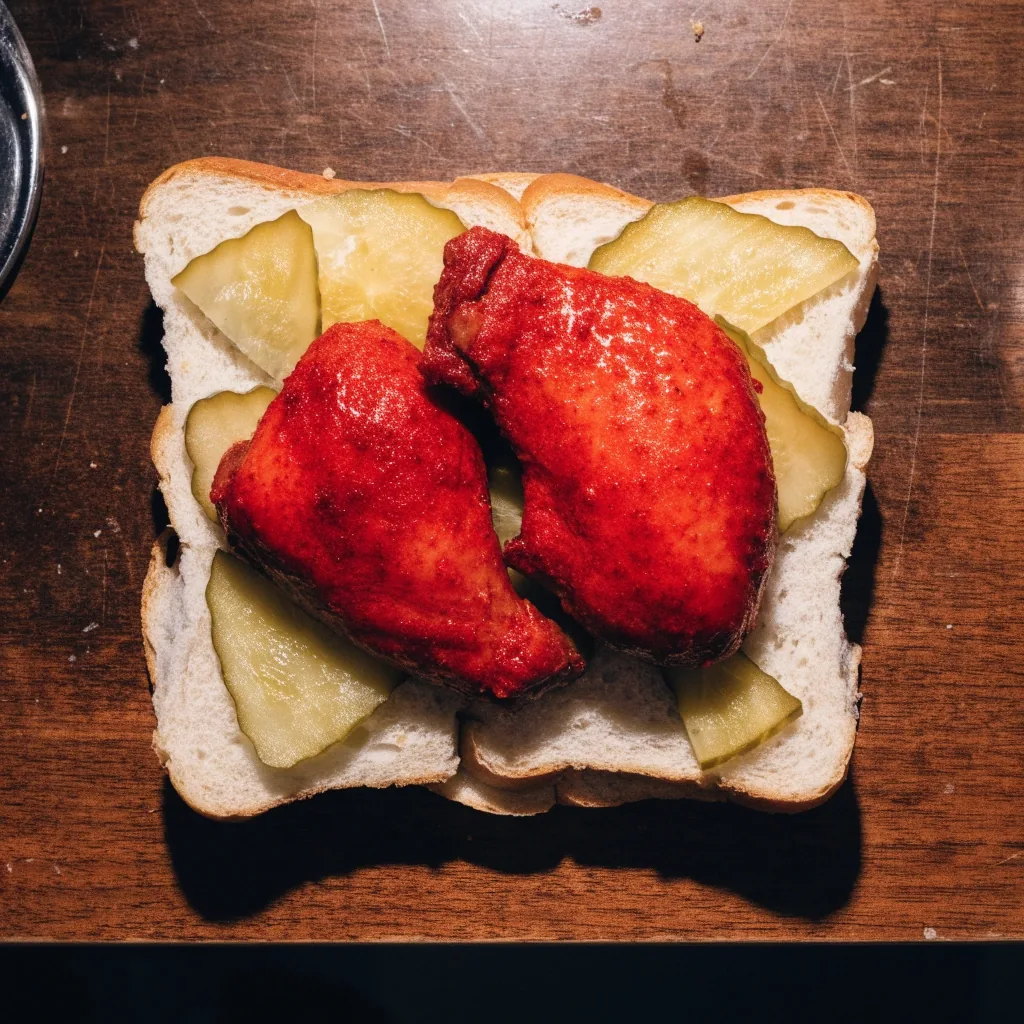
Tested on real plates
Lessons are matched against the hot chicken served in town, so the standard you cook toward is one you can taste locally.
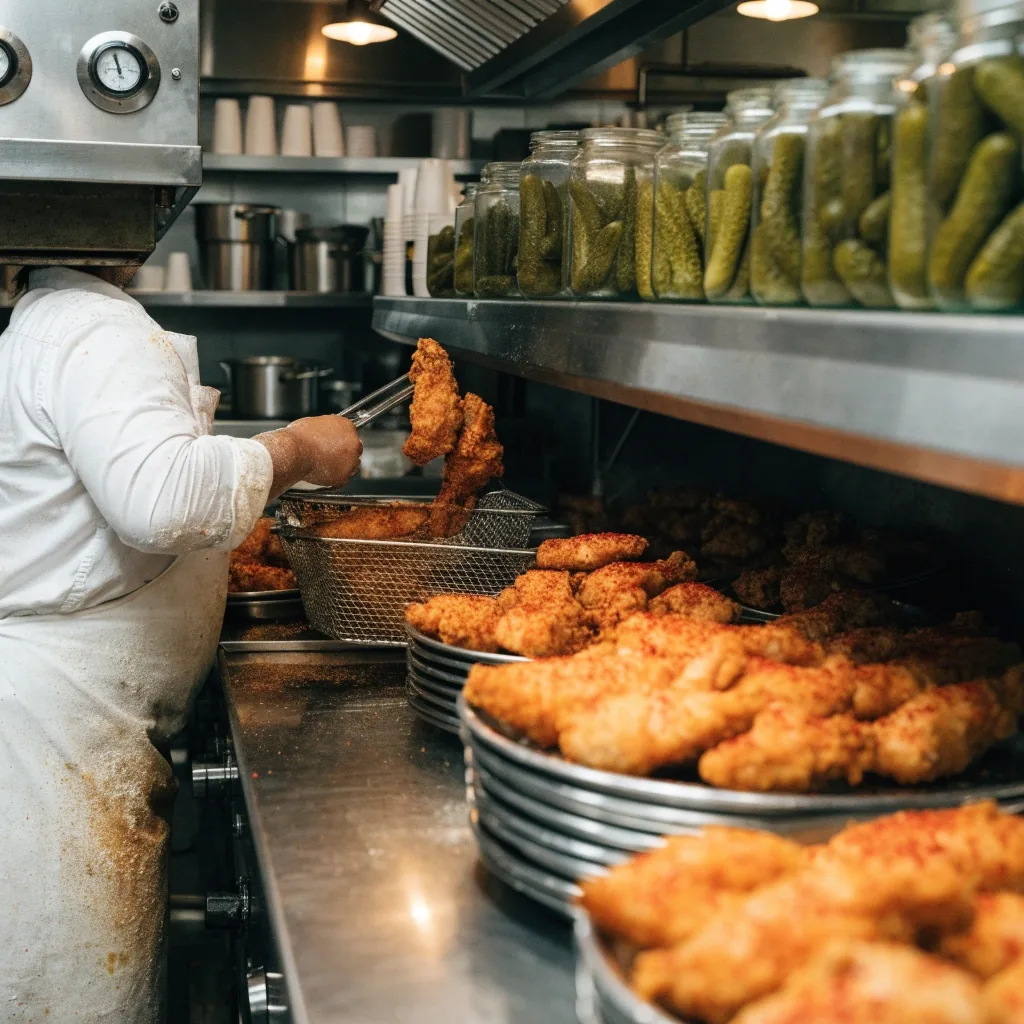
Filmed in the same kitchen
Every module is shot on 4th Ave S, with the same equipment and the same burners home cooks actually use.
Curriculum
How the curriculum was built
It started as notes for friends who kept asking how to get the crust to survive the sauce. Those notes turned into a test kitchen process: cook a batch, write down what went wrong, adjust one variable, repeat. The heat ladder came out of that, because we needed a shared vocabulary for "how hot" that wasn't just a number. Every lesson in the course survived at least a few failed batches before it was filmed.
-
Cook a batch
Each candidate lesson starts as a real tray of tenders, sliders or wings cooked the way the note claims. Nothing gets written down until the batch has been fried, sauced and eaten.
-
Change one thing
If the crust went soft or the sauce broke, only one variable moves next time — dredge ratio, oil temperature, or how long the chicken rests before it meets the cayenne oil.
-
Film what survived
A lesson is filmed only after the process holds up across repeated batches, so what you watch on screen has already failed and been corrected in this kitchen.
The Nashville context
Prince's Hot Chicken is widely credited as the original spot, and it's still the benchmark people measure against. The classic plate is bone-in, over white bread, with pickles, and that tradition is the foundation everything else adapts from.
Casual spots like Party Fowl turned the style into a social night out with drinks and shareable plates. Newer concepts like Brave Idiot push it toward sandwich-led formats for a younger crowd. The course sits inside that lineage rather than pretending to invent it.
The original plate
Bone-in chicken, white bread underneath, pickles on top. The format the whole style still answers to.
The night out
Shareable plates and drinks turned hot chicken into something you bring friends to, not just a solo dare.
The sandwich era
Newer kitchens push the same crust and sauce into handheld formats for a younger crowd.
Scope
What we teach and what we don't
The course is built for a home kitchen, so the lessons stay inside what a home cook can actually repeat on a Tuesday night. That means some things are deliberately left out.
In the course
- Technique: cayenne oil, dredge, fry temperature, and sauce timing.
- The heat ladder across five levels, from a mild starting point up to Reaper.
- Tenders, sliders, and wings as three formats of the same core recipe.
- Signature sauces, including the cayenne-forward base every other sauce builds on.
Not in the course
- Restaurant volume, franchise operations, or commercial kitchen workflow.
- Health, nutrition, or diet claims of any kind.
- Scaling a recipe to a commercial production line.
- Ingredient sourcing outside what a normal grocery store carries.
If you want a scalable commercial setup, this isn't it. If you want a plate of Nashville hot chicken that tastes like the one you had in town, the modules are written for exactly that.
Calibration
Why calibration over bravado
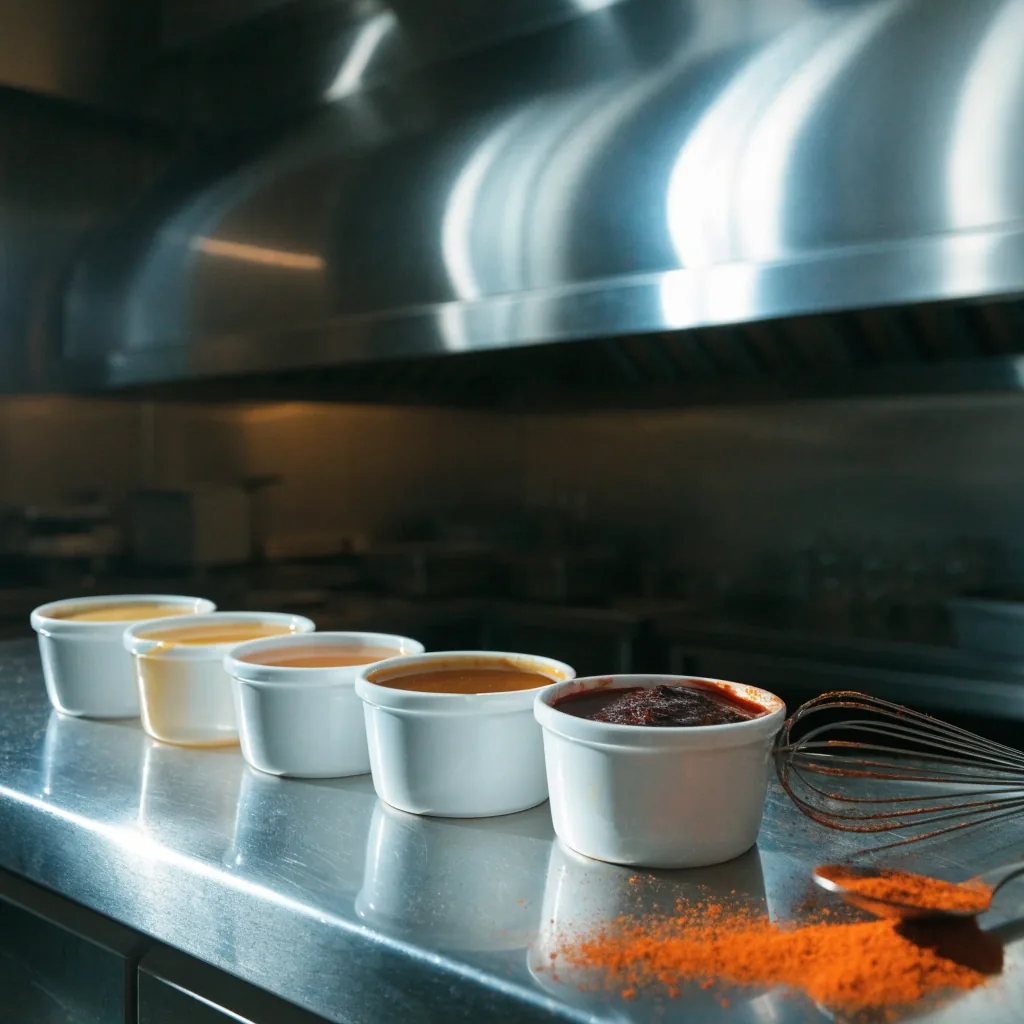
The hot chicken world has a dare culture, and it's fun, but it isn't cooking. Anyone can add more cayenne. The skill is building a level that tastes like food at the top of the scale, and that means ratios, not quantities.
Party Fowl naming its hotter offering Poultrygeist is a good example of how branding and heat interact, and it's also a reminder that the heat has to be worth eating. Our lessons treat Reaper as a recipe, not a stunt — a measured ratio of cayenne to oil, sugar, and acid that keeps the flavor readable at the top of the ladder.
See the heat ladderWho it's for
Who the course is for
The course fits a few kinds of cooks, and it's honest about the ones it doesn't fit. Read the list below the way you'd read a menu: find the line that sounds like your kitchen.
-
Home cooks who already fry chicken
You can get a crispy piece out of the skillet, and now you want the Nashville version done right — crust that holds, sauce that clings, heat that's measured rather than guessed.
-
People who ate it here and can't find it at home
You had hot chicken in Nashville and nothing near you comes close. The course walks through the cayenne oil, the dredge, and the fry so you can rebuild the plate in your own kitchen.
-
Anyone feeding a table where tolerances vary
One dinner has to work for people who want it mild and people who want it hot. The heat ladder lets you cook one batch and dial each plate up or down from the same base.
-
Complete beginners, with a caveat
If you've never fried anything, the first module will move slower than the rest, but it's still a starting point. Nothing in the course assumes a professional range or a commercial fryer.
Questions and enrollment
How we handle questions
Course questions, group enrollment, and gift enrollment all go through the same channel. The contact page lists the phone number and email, and the team answers directly. There's no ticket queue to fight through, and no chatbot pretending to be a person.
Reach the kitchen at 1204 4th Ave S, Nashville, TN 37210, or call +1-615-555-0182 during business hours, Monday to Friday, 9:00 AM to 6:00 PM. If you'd rather write, email [email protected] and someone on the team will reply.
What to ask us about
- Which module to start with if you've never fried chicken before.
- Group enrollment for a class, a club, or a group of friends.
- Gift enrollment and how access is delivered to the recipient.
- Choosing a starting heat level when your table disagrees.
Start cooking
Cook the plate you remember
The course covers Nashville hot chicken tenders, sliders, and wings, the signature sauces they're built on, and the heat ladder that runs from mild up to Reaper. If you want to see how a lesson is put together before you enroll, start with the free lesson.